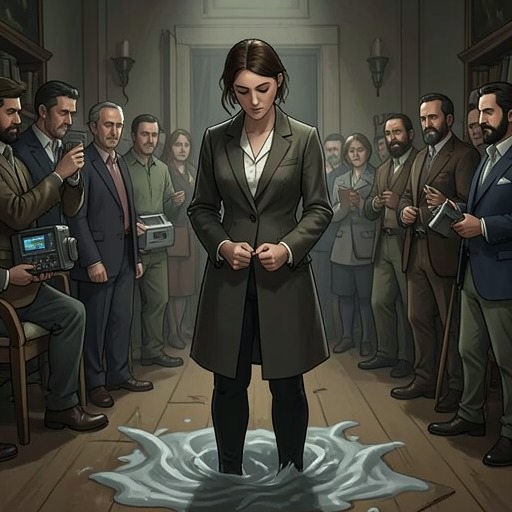
Bea Withdraws Money from the Joint Wedding Account
Gente que viene y ¡Bah!Bea’s withdrawal from the joint wedding account turns the wreckage of her engagement into a practical resource for a future she can choose herself. What begins as an impulsive late-night act—taking 1,200 euros while drunk and angry with Víctor—becomes, by morning, a decision to put the money toward her treehouse. The sequence joins retaliation to resolve: Bea takes money from a shared plan for a marriage that will not happen, then looks at her model and commits to making something of her own real.
The joint account and the late-night withdrawal
After asking León and Jacobo to accompany her to the nearest 4B cash machine, Bea produces two bank cards: her personal card and the card for the account she shares with Víctor. She identifies the joint account as the one holding the money for the wedding and honeymoon. The money therefore carries a purpose she and Víctor had planned together, even as Bea now treats their shared arrangement as available to her alone.
She enters as the password the date she and Víctor met. In her drunken calculation, Víctor will not be able to withdraw money because he cannot remember that date. Bea takes 1,200 euros and, when asked whether she intends to take all of it, says she will empty the account. She knows the balance is 2,750 euros and proposes returning at midnight, when the date changes, to withdraw another 1,200; she says she can do the same the following day. The text establishes this as her plan, not as a record that she completes those further withdrawals.
Anger, cash, and a fall
Bea’s talk makes clear that the withdrawal is not merely a response to immediate need. When León asks whether Víctor will be angry, she dismisses the prospect and declares that her ex can pay for their final drink, waving a wad of fifty-euro notes. The gesture turns the joint money into a pointed, if improvised, answer to the hurt she associates with Víctor. But the cash will not remain neatly under her control: a gust blows several notes away, and León and Jacobo catch most of them as the three run after the rest.
Bea pursues one note that lands between two cars. She braces herself against a car to retrieve it, but her hand slips and she falls, striking the ground on her already injured backside. The chase gives the episode a physical consequence as well as a financial one: the money she has just seized scatters into the street, and recovering it sends her to the ground. The existing injury from her earlier fall at the Andrada house makes this mishap an added knock rather than an isolated comic stumble.
The morning-after decision
Bea wakes in her bed surrounded by banknotes. The hangover slows her understanding of why they are there, and remembering the withdrawal brings some remorse. Still, she decides not to return the money to the bank. She tells herself that it will cover the construction of her treehouse, or at least some of the materials, and argues inwardly that half of the account is hers—perhaps a little less than half. She also frames the money as compensation for the emotional damage Víctor caused her and assumes that his new partner, the television presenter, will pay for everything anyway. These are Bea’s justifications for keeping the cash, not a settled accounting of who is legally entitled to it.
The scene ends by redirecting the money from grievance toward a concrete project. Bea looks at her treehouse model, calls it her own foolish idea, and resolves to make it real rather than find another excuse to postpone it. She decides the next step is to persuade Débora to accompany her to the sawmill. Débora’s reluctance to leave her child with their mother makes the request difficult, so Bea appeals to her sister’s bargaining ability and explains that she needs inexpensive timber because her budget is small. The withdrawal thus gives Bea a means, though not a guarantee of sufficient funds, to begin turning the model into a building.
Significance of the action
The account is a remnant of Bea and Víctor’s shared future: its stated purpose was to pay for a wedding and honeymoon. Bea’s unilateral use of it marks a change in what that money means to her. In the night-time scene it is a weapon of anger, an immediate way to make Víctor bear a cost; in the morning she recasts it as material support for a project that belongs to her. The shift is imperfect, since she keeps the money while feeling remorse and relies on self-serving assumptions to defend doing so, but it moves the episode beyond revenge.
The treehouse model provides the visible counterpoint to the cash. Bea does not yet know whether her decision will prove worthwhile; she will decide that after the treehouse is built. What changes here is her willingness to start: the money, the model, and the planned trip to the sawmill make her intention actionable. The episode therefore links the end of the wedding plan with the beginning of a separate undertaking, without suggesting that the account withdrawal resolves the hurt or settles the dispute with Víctor.